17th century church monuments
In the 17th century (c. 1601–1700), English church monuments entered a period of Baroque grandeur and Protestant introspection, reflecting the contrasting forces of monarchy, Puritanism, and Restoration. The exuberant ornament of the early Stuart era gave way to the austere restraint of the Commonwealth, before reviving in the ornate, classical idiom of the Restoration court.
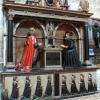
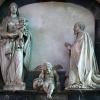
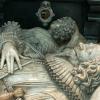
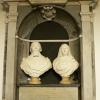
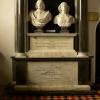
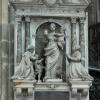
Monuments of this century were typically architectural wall tablets, often of marble or alabaster, framed with columns, pediments, and heraldic crests, echoing domestic and civic architecture. Effigies, once recumbent in medieval repose, were now frequently shown kneeling in prayer or standing in lifelike poses within elaborate niches.
This period marks the mature phase of Renaissance influence in English funerary art, infused with Baroque drama and moral reflection. Inscriptions grew more literary and introspective, emphasizing personal virtue, divine providence, and mortality rather than Catholic intercession. The imagery shifted from saints and angels to hourglasses, skulls, and broken columns, symbols of time, death, and resurrection.
The 17th-century monument thus embodied both status and spirituality, serving as a visual testament to changing religious sensibilities and the emergence of a distinctly Protestant commemoration culture, poised between worldly dignity and eternal hope.