
Elizabeth Orme Monument - Aston-le-Walls, Northamptonshire

An inscribed wall monument of white marble with black Ionic half-columns, surmounted by a sculpted bust and heraldic cartouche, commemorating Elizabeth Orme, who died on 20 January 1692. The monument combines classical architectural framing with emotive figurative carving, including a cherub’s head beneath the cornice, and belongs firmly to the late 17th-century English commemorative tradition.
Let no man rase this Remembrance
nor disturb the innocent dust of Mrs
ELIZ wife of THO ORME of Hanch Hall
by Lichfield in Com. Staff Esq. Daur.
& Cohr of WM MARSHALL of Yorksh Gt
She at 7 could read distinctly to the
Sense & at 13 had finished works like
a Curious Needle-woman. Her Riper
years past in frequent reading Divinity
observing ye Dicipline of ye Church
of England Could Insert her unaffected
Dressing her neat body her Decorum
in Housekeeping her Charity at
A larger Table could not contain it.She languished long with difficulties
to very many Physicians & Artists
on ye 2oth of Jan 1692 her breath expird
The long inscription is unusually rich in biographical and moral detail. Elizabeth is praised not for lineage alone, but for intellect, skill, piety, domestic virtue, and charity. The text records that she could “read distinctly to the Sense” by the age of seven, had mastered fine needlework by thirteen, and spent her adult life in the study of divinity and in strict observance of the discipline of the Church of England. Emphasis is placed on modest dress, orderly household management, and expansive charity — virtues presented as inseparable from religious devotion.
The inscription also records her prolonged illness, noting that she “languished long with difficulties”, consulting many physicians and practitioners, before dying after days of sustained prayer. The tone is intimate, didactic, and consciously exemplary: the monument is intended as moral instruction as much as remembrance.
The opening injunction — “Let no man rase this Remembrance nor disturb the innocent dust” — is particularly striking. Written some forty years after the English Civil War, it reflects a living memory of iconoclasm and destruction, when church monuments were defaced or destroyed by passing troops and reforming zeal. This explicit plea for preservation gives the monument a defensive quality, asserting the legitimacy of commemoration, sculpture, and episcopal Anglican practice in the post-Restoration Church.
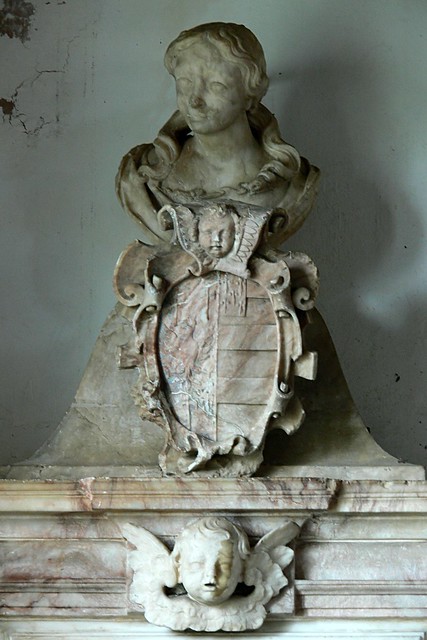
Taken as a whole, the monument is a powerful statement of Restoration Anglican identity. It affirms learning, order, charity, and embodied piety, while simultaneously defending the physical presence of monuments within the church. In both text and form, it stands as a conscious act of cultural and religious reassertion after decades of upheaval, and as a rare, eloquent testimony to the ideals expected of a devout gentlewoman in late 17th-century England.
