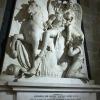
19th century church monuments
In the 19th century (c. 1801–1900), church monuments were reshaped by industrial wealth, religious revival, and historical consciousness. Commemoration expanded dramatically, driven by population growth, urbanization, and the rise of a confident middle class, while Gothic Revival and Classical styles coexisted and competed.
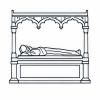
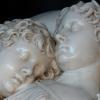
Monuments of this century are characterized by variety and revivalism. Medieval forms were consciously revived alongside Classical and Renaissance idioms, reflecting Romantic interest in the past and renewed engagement with Christian symbolism. Sculpture returned to prominence, with effigies, angels, and narrative reliefs once again filling church interiors.
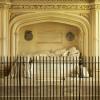
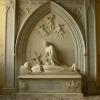
Wall monuments became increasingly elaborate and pictorial, while tombs ranged from modest memorials to grand architectural compositions. Materials such as marble, alabaster, and later granite were widely used, and inscriptions often combined moral sentiment, biography, and religious reflection.
The 19th-century church monument thus embodies the Victorian synthesis of faith, history, and sentiment. It reflects a culture of remembrance shaped by revivalist religion, social aspiration, and the desire to locate personal memory within a broader historical and spiritual tradition.