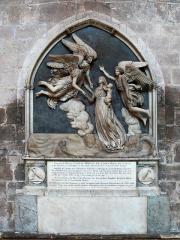
Index of Baroque Sculpture
Above the choir screen at Chartres Cathedral are some 40 sculpted reliefs of biblical scenes, and other scenes from the life of the Virgin Mary. The scenes were sculpted by some of the best artists in France and were commissioned at different times over a 200 year period from 1510 to 1720.

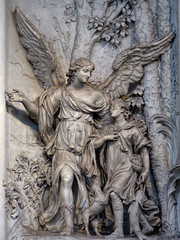 Baroque sculpture, flourishing from the late 16th century to the early 18th century, is a vibrant and dynamic art form that emerged during the Counter-Reformation, particularly in Italy, to inspire faith and awe among the faithful. Characterized by its dramatic intensity, bold movement, and emotional depth, this style contrasts with the balanced harmony of the Renaissance.
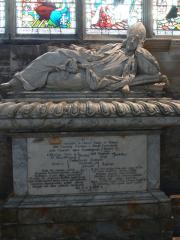
Recumbent alabaster effigy of Bishop Heton (1609).

Monument by Nicholas Stone to William Peyto (d1619) and his wife Eleanor.

Monument by Nicolas Blasset, dedicated to canon Guilain Lucas. This monument contains the Weeping Angel with one hand and elbow resting on a skull that became a popular postcard during WWI.

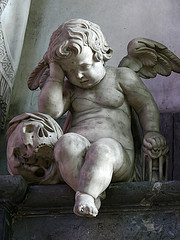
Baroque sculpture of a Weeping Angel by Nicolas Blasset.
This monument is a tomb with elaborate alabaster effigies of Alderman [no-context]Abraham Blackleech[/no-context] (d1639) and his wife Gertrude.


This collection of 17th century Flemish carved wooden panels form the reredos at the church of St Lawrence, Shotteswell in Warwickshire. They come from different periods in the 17th century and consequently are stylistically different.
Black and white Carrara marble monument to Thomas Lucy (d1640) and his wife Alice.

Wall memorial to Jean de Sachy (d1644) incorporating 'Allegory of Death' by Nicolas Blasset.

Bust of Bishop John Gaugen (d1662), Worcester Cathedral. John Gaugen was made Bishop of Worcester in May 1662 but died in September 1662 of "stone and strangury" - a complication of kidney stones.
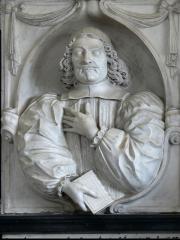
Semi reclining effigy of Bishop Peter Gunning (d1684).
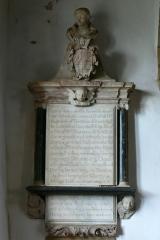
An inscribed wall monument of white marble with black Ionic half-columns, surmounted by a sculpted bust and heraldic cartouche, commemorating Elizabeth Orme, who died on 20 January 1692. The monument combines classical architectural framing with emotive figurative carving, including a cherub’s head beneath the cornice, and belongs firmly to the late 17th-century English commemorative tradition.
This marble monument to Judge John Powell (d1714) is by Thomas Green of Camberwell. John Powell presided over the trial of Jane Wenham, one of the last people convicted of witchcraft in England.
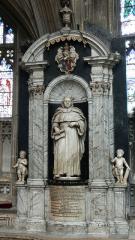
White marble monument to Thomas Deacon (d1721) and wife.

Architectural monument to commemorate members of the Benson family c1730. Probably by Smith of Warwick.

Plaque to Charles Hughes (d1734).

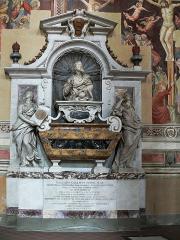
The tomb of Galileo Galilei (d1642) at Santa Croce in Florence was erected in 1737. It was designed by Giulio Foggini and contains a bust of Galileo Galilei (by Giovanni Battista Foggini), and figures representing Astronomy (by Vincenzo Foggini), and Geometry (by Girolamo Ticciati).
This memorial to Sir Thomas Street (d1696) is the work of the sculptor Joseph Wilton a founding member of the Royal Academy, and was made around 1774.

This monument by John Flaxman is to Sarah Morley (d1784) who died a few days after giving birth whilst travelling back to England from India. Both Sarah and her child were buried at sea.