
 This portal of the Virgin, at Notre Dame Paris, was sculpted between 1210 and 1220. The main scene show the Coronation of the Virgin, where Mary is being crowned Queen of heaven by an angel, whilst she sits on the same throne as Jesus. In the lintel below is Mary on her death bed surrounded by Jesus and the twelve aposles, two angels are about to lift her to heaven. In the lower lintel the old testament prophets are holding scrolls prophesying Christ.
PeriodIndex
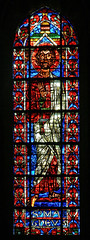
Window 208 forms part of the distinguished apostolic cycle that runs around the clerestory of Bourges Cathedral. It presents three standing apostles in individual lancets: St Bartholomew on the left, St Matthew in the centre, and St Simon on the right. Each is set before a deep blue background and surrounded by the richly coloured geometric border characteristic of the Bourges glazing workshop in the early thirteenth century.
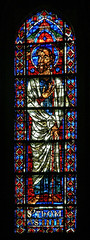
Window w.206 forms part of the major early 13th-century glazing programme of the choir clerestory at Bourges Cathedral. Like the other apostolic lancets in this zone, it presents three full-length apostles standing beneath architectural canopies, each framed by the characteristic red–blue geometric borders of the Bourges workshop. The style, palette, and facial types align closely with the glazing campaigns dated to c.1210–1215.

This stained glass window is dated between 1210 and 1215. Illustrating the discovery of the relics of St Stephen from a dream by Lucian. This window is situated in the ambulatory of Bourges Cathedral.

Depicting the events in the life of Mary of Magdalene this window, in Chartres Cathedral, is from about 1210. According to Christian tradition she was one of Jesus' follows in Galilee, healed of seven devils, was present at the crucifixion, was the person to find the tomb empty, and the first person whom Jesus appeared to and given the task of announcing his Resurrection.
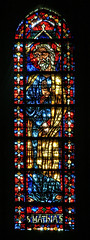
Window w.212, located high in the south choir clerestory of Bourges Cathedral, dates from c.1210–1215 and belongs to the earliest glazing phase of the High Gothic choir. The window presents two Evangelists, Mark and Luke, and one Apostle, Matthias.
This trio forms part of a wider apostolic–evangelist cycle distributed around the clerestory, each figure shown as a monumental standing saint set within a richly patterned Gothic frame.
 The Cathedral of St Stephen, Bourges contains a large number of medieval and renaissance stained glass. The glass panels date from 1210 - 1620 and represents Saints, Apostles, Prophets, and Bible stories.
The above rose window in the west of the church was built in the last part of 14th century.
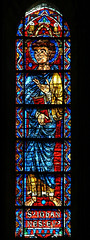 Window 204 consists of two tall lancets forming part of the celebrated early thirteenth-century clerestory glazing of Bourges Cathedral. The saints represented, Andrew on the left and John the Evangelist on the right, are shown as full-height standing figures beneath architectural canopies, framed by the characteristic geometric borders of the Bourges workshop.
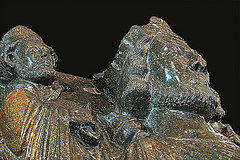 Tomb of King John the youngest son of Henry II and Eleanor of Aquitaine. Made from Purbeck marble the sarcophagus dates from about 1230 and is the earliest effigy in the country to an English king. Originally the effigy would have lain on the floor, but as more elaborate tombs were installed in later years, John's effigy was raised up to rest on a tomb chest that was made in about 1540.

The left hand side of the Zodiac window at Chartres Cathedral contains the twelve months of the year. The panels here depicting January to June, were donated by count Thibault VI on behalf of Thomas of Perche.