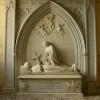
Thorneycroft, Mary
Mary Thorneycroft (1814–1895) was an English sculptor active in the mid nineteenth century, notable as one of the earliest women to achieve professional recognition in British sculpture. Working within a restrained neoclassical tradition, she produced portrait busts, ideal figures, and commemorative works characterised by clarity of form and academic discipline.
Thorneycroft trained in London and Rome, studying antique sculpture and contemporary academic practice at a time when formal artistic education for women was severely restricted. Despite these limitations, she established a professional career and exhibited at the Royal Academy, earning respect for the quality and seriousness of her work rather than for novelty alone.
Her sculpture is marked by careful modelling, balanced compositions, and a preference for idealised yet naturalistic representation. In both portraiture and ideal subjects, she avoids theatrical gesture, aligning her work with the measured classicism associated with the Chantrey tradition rather than with later Victorian exuberance.
Although long marginalised in art-historical accounts, Mary Thorneycroft ⓘ occupies a significant place in the development of nineteenth-century British sculpture, both for the quality of her work and for her role in widening professional opportunities for women sculptors.