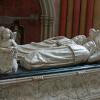
Colombe, Michel
Michel Colombe (c. 1430–1513) was one of the most important French sculptors of the late fifteenth and early sixteenth centuries. Active primarily in the Loire Valley, he played a central role in the transition from late Gothic sculpture to the emerging French Renaissance.
Colombe was trained within the Gothic workshop tradition, and much of his early work retains the verticality, drapery rhythms, and devotional gravity characteristic of late medieval sculpture. However, over the course of his career he absorbed new classical influences arriving from Italy, integrating greater naturalism, spatial coherence, and compositional clarity into his work.
His sculpture is distinguished by its exceptional refinement of surface, sensitive modelling of flesh and drapery, and a calm, restrained expressiveness. Figures retain a monumental dignity even when richly detailed, reflecting a synthesis of Gothic spirituality and Renaissance humanism.
Colombe’s most celebrated work is the tomb of Francis II, Duke of Brittany, at Nantes Cathedral, a masterpiece of French funerary sculpture that epitomises this stylistic transition. Through works of this scale and ambition, Colombe established a sculptural language that would shape French monumental sculpture well into the sixteenth century.