Blasset, Nicolas
Nicolas Blasset ⓘ (1600–1659) was a French sculptor active primarily in Amiens and Picardy during the first half of the seventeenth century. He is best known for funerary monuments and ecclesiastical sculpture that combine late Renaissance traditions with the emerging classical restraint of the early Bourbon period.
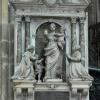
Blasset worked within a strong regional workshop tradition, supplying monuments for cathedral clergy, civic elites, and local nobility. His sculpture retains a pronounced sense of structure and decorum, favouring clear composition and legibility over dramatic movement. Figures are typically calm, frontal, and hieratic, reflecting both Counter-Reformation ideals and the persistence of Renaissance monument types.
While Blasset’s work does not display the full Baroque dynamism associated with contemporary Roman sculpture, it demonstrates a gradual shift toward greater naturalism and architectural coherence. Drapery is controlled rather than agitated, and figures are integrated into architectural frameworks that emphasise order and proportion.
Blasset occupies an important position in French sculpture as a transitional figure, bridging late Renaissance funerary traditions and the more fully classical idiom that would dominate later in the seventeenth century. His monuments provide a valuable regional counterpoint to developments in Paris and Rome, illustrating how stylistic change was mediated through local practice.