14th century
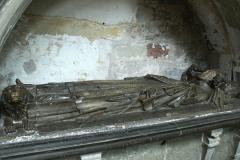
Bishop Thomas de Cobham Effigy - Worcester Cathedral
Purbeck marble ⓘ effigy of Bishop Thomas de Cobham (d1327). Worcester Cathedral.
Brass monument makers, London ‘C’
The designation “London ‘C’” is used by modern scholarship to identify an anonymous group of London-based brass engravers responsible for a coherent body of late medieval monumental brasses. The label derives from stylistic analysis rather than documentary evidence and distinguishes this workshop from other contemporary London groups.
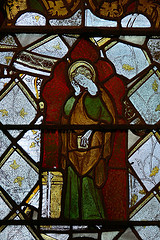
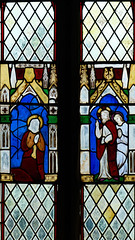
C14th English stained glass fragments - Pattishall Northamptonshire

This fragmentary but evocative window from Holy Cross Church, Pattishall, preserves elements of a 14th-century English stained glass narrative cycle. The surviving lights depict a kneeling orant figure with hands raised in prayer, and beside it, a group showing Christ with a disciple or saint, set beneath delicately painted Gothic architectural canopies.
Chartres Cathedral
Chartres Cathedral has some of the most beautiful medieval stained glass windows to have survive the upheavals of the last 800 years. The earliest date from the mid 12th century, but most are from the 13th century.
Cross legged knight - Salisbury Cathedral
Once thought to be an effigial monument to William Longespee (d1250) the date of the armour places this as a 14th century monument.
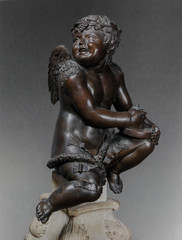
Dancing Angels: Donatello’s Renaissance Spiritelli
Donatello’s ⓘ spiritelli—small bronze, dancing child figures—embody the Renaissance fusion of classical vitality and Christian joy. Created for settings from pulpits to private collections, these lively winged children transformed ancient putti into symbols of divine life and humanist celebration. Through their movement, naturalism, and charm, Donatello redefined sculpture as a living expression of sacred and worldly beauty.